- and AND or
- and OR or
- (and AND or) AND (and OR or)
- (and AND or) OR (and OR or)
- others?
What's the one that makes the most sense to you? And why? How do you think it is used conventionally?
It seems to me that it's something easy to say, and easy to feel "yes I understand that" but when you think more about it, perhaps that clarity present in the initial impression dissipates, and you're left wondering..."What exactly did I just say?"
Some things are generally accepted:
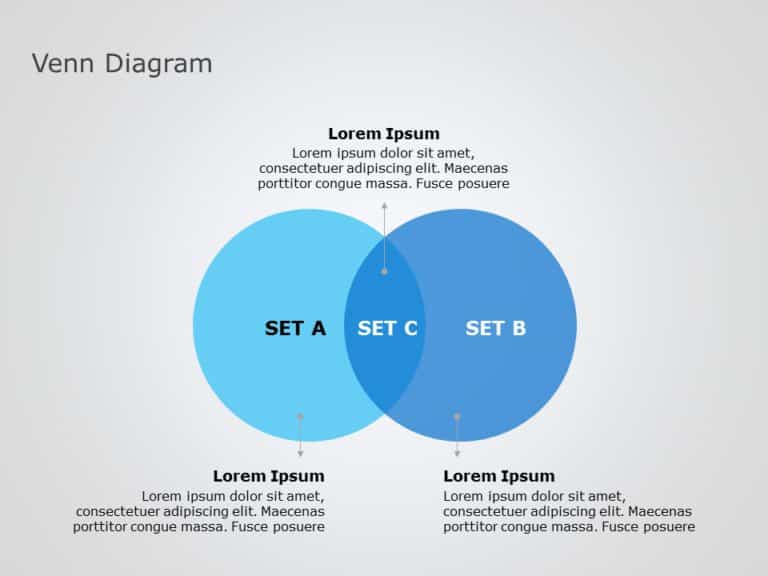
"left" -> sets A, C
"right" -> sets B, C
"left and right" -> set C
now "or" is ambiguous... depending on the person, "left or right" may mean sets A, B, C or just sets A, C.
So to clarify, one can say: "left and/or right" -- this would be sets A, B, C
Or alternatively, "either left or right" -- this would be sets A, C
1. just A, or
2. just B, or
3. both A and B
I have usually seen it written with a slash: "and / or" which means one of either "and" or "or" and the reader or listener should interpret which one is correct.
In a Venn diagram sense, it would mean either an intersection or union.
>> It seems to me that it's something easy to say, and easy to feel "yes I understand that" but when you think more about it, perhaps that clarity present in the initial impression dissipates, and you're left wondering..."What exactly did I just say?"
It is not precise language. It is a shortcut phrase, similar to "you know what I mean?" Does the listener REALLY know what is meant or do they just think that they do?