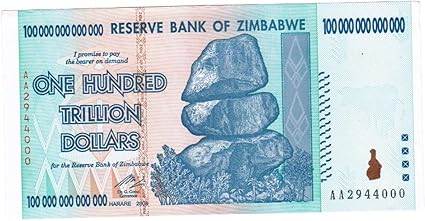
Printing money is tantamount to debt (== liability). If there's sufficient corresponding economic value and future economic growth (== asset) on the other hand such debt isn't necessarily a problem.
The money "printed" right now to counter the effects of the current economic crisis essentially is a bet on the future. If that money is invested appropriately and intelligently this investment will stimulate future economic growth, which in turn can be used to offset debt (for example via future tax revenues).
Haphazardly expanding the amount of money available to the economy without a proper strategy. however, usually leads to inflation and poverty and the economy not being able to keep up with the devaluation of the currency anymore.
Debt in Spain, debt in the USA, debt in Greece, debt in former Soviet countries, debt in Japan, debt in China, what's the difference? Since most industrialized nations have allowed their business owner classes to bribe their way into paying less in taxes than is required to fund their governments, public debt is ubiquitous as a solution to insufficient tax revenue.
For country XYZ to have money worth more than country ABC due to your hypothetical question, there has to be a government somewhere with stable financial markets and significantly less debt than other countries. At present, to my knowledge, no such place exists.
https://images-na.ssl-images-amazon.com/images/I/71j-2%2B22P...
https://www.thebalance.com/what-is-hyperinflation-definition...